A history of relentless fighting shapes the strength of today.
Known as the “Combat Karate (Jaket MMA) of western Japan,” Seikukai has actively sent fighters to the tournaments of other schools. Beyond full-contact karate, our athletes compete on a wide range of stages unbound by rules — kickboxing, MMA and more.
Seikukai was founded in 1977 in Kawanishi by Shingo Ikarii, who had trained in traditional karate. Wearing Super Safe protectors and allowing face punches and throws, its practical style made it an innovative karate organization for its time. In 1993 it held an All-Japan tournament at World Memorial Hall, leading the Kansai combat-sports scene.
In 1997 it opened a permanent dojo in front of Hankyu Kawanishi-Noseguchi Station.
In 2000 it opened the Osaka, Nissei-Chuo and Takarazuka dojos, and in 2006 moved its headquarters to Hachizuka, Ikeda.
Membership grew to nearly 300 at one point, making it one of Kansai’s leading karate organizations.

However, in 2016 the founder’s retirement triggered a sharp decline in membership, and Seikukai faced a crisis of survival.

In July 2018, the current representative Kosho Tanaka became the third-generation head, restarting from about 20 members. Building trust little by little despite the headwinds of the COVID-19 state of emergency, the dojo reopened in renewed form in front of Ikeda Station in 2022.

By 2023 membership had passed 120, and the dojo has regained its vitality.
In 2025 it was authorized as a Kawanishi city school-club activity, and the Nissei-Chuo dojo moved to the Kawanishi Municipal Midoridai Junior High branch.

Seikukai will keep taking on challenges — rising again however many times it takes, to pass “real strength” on to the next generation.
Timeline
| 1977 | Founding master Shingo Ikarii establishes Seikukai. |
| 1979 | Holds Japan’s first tournament under Combat Karate rules. |
| 1985 | Holds western Japan’s first Combat Karate open tournament. |
| 1987 | Seikukai’s tournament becomes established as western Japan’s largest Combat Karate event. Named the “Combat Karate of western Japan” by a karate specialist magazine. |
| 1989 | Seikukai fighters excel at the Hokutoki Championship. |
| 1992 | Expedition to the Netherlands, a powerhouse of combat sports. Absorbs European kickboxing technique at Peter Aerts’ Chakuriki gym. |
| 1993 | Holds its own All-Japan Championship at World Memorial Hall (Kobe). |
| 1995 | Scales back activities due to the Great Hanshin-Awaji Earthquake. |
| 1997 | Establishes its headquarters dojo in Kawanishi. Expedition to the United States. |
| 2000 | Opens the Osaka, Nissei-Chuo and Takarazuka dojos. |
| 2004 | Headquarters dojo relocates from Kawanishi to Ikeda. |
| 2016 | Masatoshi Hyakutake becomes the second-generation head. |
| 2017 | Ikeda headquarters dojo relocates to Saison Kaikan. |
| 2018 | Kosho Tanaka becomes the third-generation head. |
| 2022 | Ikeda headquarters dojo reopens, renewed, in front of Ikeda Station. |
Successive Heads of Seikukai
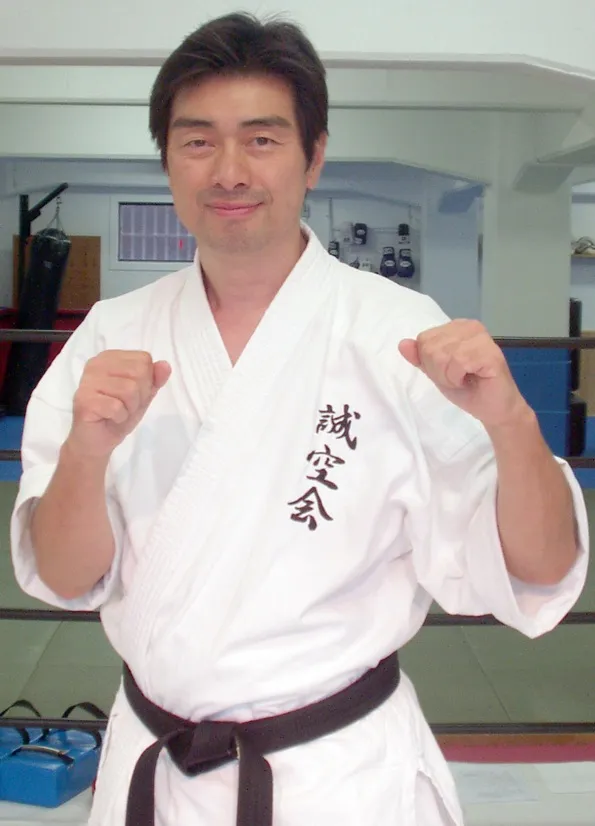
Founder: Shingo Ikarii
SINGO IKARI
Traditional Karate 4th dan / Combat Karate 5th dan
Books:
- “A Combat-Karate Dojo Master with a Heart for Welfare” — 15 Years of Experience! A True Story: The Passionate Caseworker (Kodansha)
- How Far Can You Live on Public Assistance!? — A Practical Manual (Kodansha)
- Fighting King: Gachi Final (Gentosha)
- A True Story: The Passionate Caseworker (Gentosha Bunko)
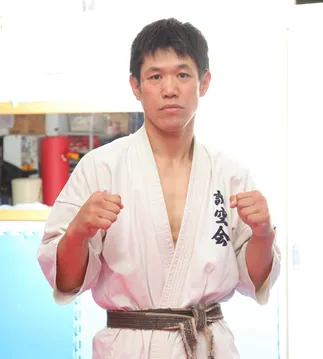
Second-generation head: Masatoshi Hyakutake
MASATOSHI HYAKUTAKE
Combat Karate 2nd dan
- 2003 Combat Karate All-Japan Championship — 3rd place
- 2005 Combat Karate All-Japan Championship, Middleweight — Runner-up
- 2007 Combat Karate All-Japan Championship, Heavyweight — Champion
- Former Shoot Boxing Japan Super-Welterweight — 4th